Thursday, November 13, 2014

H&M Responds to Ethiopia Cotton Land-Grabbing Accusations | Sourcing Journal Online


Posted on November 12, 2014 by 
Swedish retailer H&M said it makes every effort to ensure its cotton does not come from appropriated land, however, the company admitted that it cannot provide an absolute guarantee.
The statement from the world’s second-largest retailer is in response to a Swedish television show’s accusation that H&M was using cotton from areas in Ethiopia that are vulnerable to land-grabbing. Land-grabbing is used to describe the buying or leasing of land in developing countries without the consent of the surrounding local communities. Governments of developing countries often sell the land to foreign companies as an attempt to boost agriculture, but in some cases local farmers are forced off their property.
According to a company statement, “H&M does not accept appropriation of land, so-called land-grabbing. Because of that we demand that our suppliers ensure that they do not use cotton from the Omo Valley region where there is a higher risk for land-grabbing.”
H&M said its risk assessment showed that land-grabbing did not take place where its direct suppliers are located and that it was not possible to trace any land-grabbing further down its cotton delivery chain. “The cotton used in our products come from different regions and we therefore cannot guarantee that the cotton fiber is not from the affected areas. Today we can only trace organic cotton and sustainable cotton from the Better Cotton Initiative. Our goal is to use 100 percent of the cotton by the year 2020, which will allow for better control. We are already the world’s biggest buyer of organic cotton,” H&M noted.
The Swedish retailer has been at the forefront of promoting Ethiopia’s garment industry since it began sourcing from the African country in 2013. It noted that its experiences in dealing with other global textile industry issues, like wage talks in Bangladesh, are lessons it takes with them as the company begins to form partnerships with Ethiopian suppliers.
H&M said it welcomes the review of its operations and a discussion of how the industry as a whole can work to affect the textile industry in a positive way. “Together with other stakeholders, we have a responsibility to deal with the problem of land-grabbing. By attending in the country work preventively, we see that we can influence in a positive direction,” the retailer shared.
The company added that it has also discussed the issue of land-grabbing with representatives of the Ethiopian government while also keeping an ongoing dialogue between aid agencies and the Ethiopian government. H&M said, “Key issues are how local people are involved and compensated properly when the state leases land.”

Thursday, November 6, 2014

Regreening program to restore one-sixth of Ethiopia's land | Environment | theguardian.com


Tree and shrub-planting program has transformed degraded and deforested land across Africa, with Ethiopia planning to restore a further 15m hectares by 2030
Regreening Ethiopia
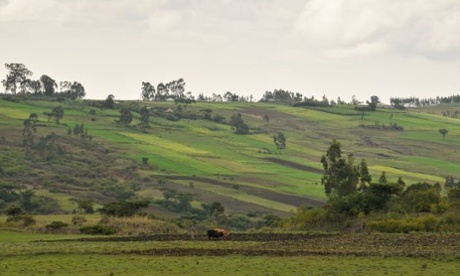
Bale Mountains, Ethiopia: Trees and shrubs can be seen growing on the steeper slopes along a ravine that was once plagued by erosion. Photograph: Aaron Minnick/WRI
Fifteen years years ago the villages around Abrha Weatsbha in northern Ethiopia were on the point of being abandoned. The hillsides were barren, the communities, plagued by floods and droughts, needed constant food aid, and the soil was being washed away.
Today, Abrha Weatsbha in the Tigray region is unrecognisable and an environmental catastrophe has been averted following the planting of many millions of tree and bush seedlings. Wells that were dry have been recharged, the soil is in better shape, fruit trees grow in the valleys and the hillsides are green again.
The “regreening” of the area, achieved in just a few years for little cost by farming communities working together to close off large areas to animals, save water and replant trees, is now to be replicated across one sixth of Ethiopia – an area the size of England and Wales. The most ambitious attempt yet to reduce soil erosion, increase food security and adapt to climate change is expected to vastly increase the amount of food grown in one of the most drought- and famine-prone areas of the world.
“Large areas of Ethiopia and the Sahel were devastated by successive droughts and overgrazing by animals in the 1960s and 1970s,” says Chris Reij, a researcher with the World Resources Institute in Washington.
“There was a significant drop in rainfall, people had to extend the land they cultivated and this led to massive destruction and an environmental crisis across the Sahel. But the experience of Tigray, where over 224,000 hectares of land has now been restored shows that recovery of vegetation in dryland areas can be very fast. Tigray is now much more food secure than it was 10 years ago. You really see the changes there,” he says.
Rather than just plant trees, which is notoriously unreliable and expensive in dry land areas, the farmers have turned to “agro-ecology”, a way to combine crops and trees on the same pieces of land.
A trailer for a new documentary by film-maker Mark Dodd on the land restoration project in Tigray.
In Tigray it has involved communities building miles of terraces and low walls, or bunds,  to hold back rainwater from slopes, the closure of large areas of bare land to allow natural regeneration of trees and vegetation, and the widespread planting of seedlings.
“The scale of restoration of degraded land in Tigray  is possibly unmatched anywhere else in the world. The people ... may have moved more earth and stone [in recent years] to reshape the surface of their land than the Egyptians during thousands of years to build the pyramids,” says Reij.
“In the early 1990s every able-bodied villager in Tigray had to contribute three months of labour to dig pits to save water, or to construct terraces and bunds to stop water rushing off the hills. This was reduced later to 40 days a year and currently it is 20 days a year.
“Several hundred thousand hectares are now under ‘exclosures’ - degraded areas in which no cutting and grazing is permitted. This allows the natural regeneration of vegetation. Tens of thousands of kilometres of rock bunds and terraces have been constructed, often on steep slopes,” he added.
Ethiopia’s pledge to restore a further 15m hectares of degraded land was the largest of many made at the end of UN secretary general Ban Ki-moon’s New York climate summit last month, where governments, companies and civil society groups together agreed to try to restore 350m hectares of deforested landscapes - an area the size of India - by 2030.
Regreening Ethiopia
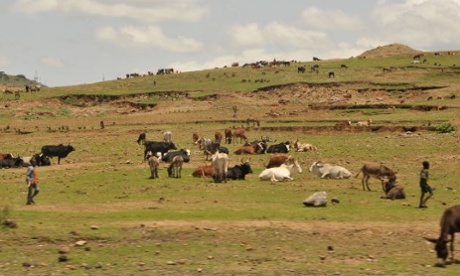
Almost all vegetation has been lost from this hillside due to deforestation and overgrazing from cattle. Photograph: Aaron Minnick/WRI
Commitments have now come from Uganda (2.5m hectares), Democratic Republic of the Congo (8m hectares), Colombia (1m hectares), Guatemala (1.2m hectares), and Chile (100,000 hectares). Many others are expected to follow in the run-up to the Paris climate talks in December 2015 because the restoration of degraded land is expected to qualify for carbon credits.
Africa, with help from the World Bank, the UK government and development groups like Oxfam and World Vision, has emerged as the leader in restoring the world’s estimated 2bn hectares of degraded lands.
According to Reij, a quiet revolution has seen over 200m trees planted and 5m hectares of degraded land regreened in Niger. The result, says a report by the International Food policy research institute, has been extra 500,000 tonnes of food grown in the country with the fastest growing population in the world, as well as an increase in biodiversity and incomes.
In Burkina Faso where 2-300,000 hectares of land has been regreened, food production has grown about 80,000 tons a year – enough to feed an extra 500,000 people.
“There are a lot of inspirational examples in Africa. In Tanzania 500,000 hectares of land has been restored. What this shows is that well-managed ecosystems are good for biodiversity as well as for food security, water supplies and climate change,” said Stewart Maginnis, director of International Union for Conservation of Nature’s (IUCN) nature-based solutions group in Geneva.
Increasing the rate of restoration of degraded lands will be vital both for feeding fast-growing populations and adapting to climate change, says Green Belt Movement (GBM) international director, Pauline Kamau.
“Africa is already experiencing some of the most dramatic extreme temperature events ever seen. Without action to reduce emissions, average annual temperatures on the continent are likely to rise 3-4C by the end of the century and [there could be] a 30% reduction in rainfall in sub Saharan Africa.
“We know that regreening could be a key part of the solution to these problems. Agriculture, forestry and other land use changes accounts for nearly 25% of greenhouse gas emissions globally. Restoring degraded lands can both help rein in warming and adapt to higher temperatures,” she said.

UNIDO Forum Expresses Cautious Optimism on Ethiopia’s Economic Strides | Inter Press Service

Reprint |    |  Print | 
VIENNA, Nov 5 2014 (IPS) - With annual economic growth rates of over 10 percent and attractive investment conditions due to low infrastructural and labour costs, Ethiopia is eagerly trying to rise from the status of low-income to middle-income country in the next 10 years.
Ethiopia, with some 94 million inhabitants, is the second most populous country in Africa after Nigeria, but it remains a predominantly rural country. Only 17.5 percent of the population lives in urban areas, mainly Addis Ababa.
It is also one of the continent’s fastest growing economies. Between 2015 and 2018 growth is expected to average 7.3 percent, according to a recent study by the United Nations Industrial Development Organisation (UNIDO).
While economic growth since 2006/2007 doubled per capita income to 550 dollars in 2012/13, and the percentage of people living below the national poverty line dropped from 38.9 in 2004 to 29.6 in 2011, government sources admit that eradication of poverty remains a compelling issue.
“There is not a single country in the world which has reached a high state of economic and social development without having developed an advanced industrialised sector” – UNIDO Director General Li Yong

The official target of rising to a middle-income country is considered to be realistic, but an East Asian diplomat accredited to the African Union in Addis Ababa says there is reason to be sceptical, partly because although the amount of foreign direct investment (FDI) rose from 0.5 percent in 2008 to 2 percent in 2013, investors continue to face trade constraints.
According to UNIDO, these are mainly related to border-logistics. Djibouti, the main import-export seaport used by Ethiopia, is situated 781 km from Addis Ababa, which makes the cost of land transportation a critical factor.
It is against this backdrop that UNIDO has chosen Ethiopia, along with Senegal, as a pilot country for its ambitious inclusive and sustainable industrial development (ISID) programme, which aims to achieve industrialisation in developing countries in order to eradicate poverty and create prosperity.
According to UNIDO Director General Li Yong, “there is not a single country in the world which has reached a high state of economic and social development without having developed an advanced industrialised sector”.
What distinguishes the ISID programme is that “current modes of industrialisation are neither fully inclusive nor properly sustainable”, he added. UNIDO is therefore not merely promoting industrialisation but trying to approach the needs and challenges of the globalised world that demand future-oriented concepts.
Promoting the sustainability that should be inherent to industrialisation, UNIDO says that the ISID programme takes into account environmental factors together with its partner countries and organisations.
It also fosters an industrialisation that is inclusive in sharing the benefits of the generated prosperity for all parties involved, thereby promoting social equality within populations as well as an equal distribution between men and women to ensure that nobody is excluded from the benefits of growth.
To show how these objectives can be met and to promote ISID, UNIDO organised the Second Forum on ISID from Nov. 4 to 5 in Vienna. In an opening statement, U.N. Secretary-General Ban Ki-moon said: “We have a vision of a just world where resources are optimised for the good of people. Inclusive and sustainable industrial development can drive success.”
The Secretary-General, who is a strong advocate of the sustainable development agenda, also said that in order to achieve this objective, “industrial development must abandon old models that pollute. Instead, we need sustainable approaches that help communities preserve their resources.”
Prime Minister Hailemariam Desalegn of Ethiopia and Prime Minister Mahammed Dionne of Senegal – representing the two pilot countries chosen for ISID – commended UNIDO for implementing a partnership programme, and Ethiopia’s State Minister of Industry, Mebrahtu Meles, emphasised that building industrial zones will accelerate industrialisation, as has been done by Asian countries such as China.
Forum participants expressed optimism about Ethiopia achieving economic growth through inclusive and industrial sustainable development provided that leadership and vision focused on the country’s comparative advantages while improving infrastructure.
They said that regional integration could be key for the development of the country, and called for further exploration of UNIDO’s role as a catalyst of transformational change.
In particular additional efforts were required to enhance the productivity in existing light industries such as agro-food processing, textiles and garments, leather and leather products. There was also a need to diversify by launching new industries such as heavy metal and chemicals and building up high-tech industries like packing, biotechnology, electronics, information and communications.
The ambassadors of China, Japan and Italy to Ethiopia – Xie Xiaoyan, Kazuhiro Suzuki and Giuseppe Mistretta respectively – as well as business stakeholders and development banks assured their continued support in helping Ethiopia take the path towards inclusive and sustainable industrial development, mainly through UNIDO.
(Edited by Phil Harris)

Saturday, October 25, 2014

Could This Ethiopian Grain Be the New Quinoa? | TakePart


Tiny teff packs a nutritional punch and thrives in dry climates.


Josh Scherer is an editorial intern at TakePart. He has written for Epicurious andThrillist and once ate at three Guy Fieri restaurants in one night. He is a fifth-year, zero-time all-American at UCLA.

-------------


It’s drought resistant, easy to harvest and cook, and easier to spell than freekeh andquinoa. Meet teff, the diminutive ancient grain that’s been feeding Ethiopia for 5,000 years—and might soon be coming to a store near you.
Before the first teff was sown on U.S. soil, it was already known for helping to drag Ethiopia out of the 1983 famine, which ravaged the war-torn nation for three years.
Subsistence farming became a necessity for rural families in the wake of the crisis, which would kill an estimated 400,000 people. Teff’s high nutrient density—it contains 26 grams of protein per cup—and high yields made it a staple crop during scarce times.
“There was nothing to eat. There was not any food even to see,” one farmer recalls in this Perennial Plate video, which shows a family harvesting teff, separating the tiny grain from the dry chaff. “To prevent it from happening again, we must work hard and take care.”
Some American farmers are taking note of the ancient grain’s resilience and believe it could be a useful tool in mitigating the effects of drought on livestock.


At New Mexico State University’s Agriculture Experiment Station, cows and horses are fed a rotating diet of alfalfa and teff, cutting the facility’s water usage by 25 percent, according to a press release from the school.
It is also being grown as a consumer crop by The Teff Company in Idaho’s Snake River Valley. The long summers, intense heat spells, and basaltic soil mimic the climate and geology of East Africa, says owner and teff evangelist Wayne Carlson.
The Ethiopian government prohibits the export of any raw teff product, so the demand for its domestic cultivation is on the rise. That means that any teff boom wouldn’t come with the attendant problems of quinoa’s popularity, as it wouldn’t be shipped from a poor nation half a world away.

Celebrating Seeds - MELCA-Ethiopia

Saturday, October 18, 2014

Kenya's Flower Farmers Could Relocation After EPA Talks Collapse | AFKInsider


By Kevin Mwanza 
Ethiopian flower farmer (Photo: hypericumcoco.com) Ethiopian flower farmer (Photo: hypericumcoco.com)
Flower farmers in Kenya have warned that they could mass relocate to either Ethiopia or Tanzania if the collapsed  Economic Partnership Agreement ( EPA) talks are not revived soon.
The over 60 flower farmers, most of them foreign investors, base at the shores of lake Naivasha in the rift valley are responsible for over 75 percent of the country’s flower export which forms the biggest chunk of Horticultural earnings.
Horticulture is a leading source of foreign exchange for east Africa’s biggest economy alongside tea exports and tourism and agriculture accounts for about a quarter of Kenya’s gross domestic product. The country earned 93 billion shillings ($1.05 billion) from the cultivation of fruit, vegetables, flowers and nuts last year, up from 87.71 billion in 2012, Reuters reported.
Talks between EU and East Africa Community (EAC) collapsed and has forced Kenyan flower exporters to pay higher taxes to accessing European markets, which accounts for a large chunk of the exports from the region.
Kenyan flower exporters started paying taxes on goods entering the EU since Oct. 1, while their relief, the Economic Partnership Agreement (EPA) which grant Africa product tax free in the European market, is said to take six months for ratification, XINHUA reported.
Analysts say it is particularly essential for Kenya – the only country in east Africa classified as a developing country to sign the deal. The rest of EAC Partner States are categorized as Least Developed Countries (LDCs), which puts them in a better trading position compared to Kenya.
Under the EU protocol, LDCs do not have to sign the EPAs since their preferences will continue under the Everything But Arms (EBA) trade arrangement. Further, Kenya is likely suffer more as her partners export little into the EU.
“Some of the farmers, mainly those dealing in vegetables, are considering relocating to Ethiopia where the labor is cheap and their products won’t be taxed. Flower farms might be forced to follow suit come next year and move to Ethiopia if the Government does not resolve the EPA issue with the European Union,” Maridadi Flowers Managing Director Jack Kneppers was quoted by The Standard saying.
Maridadi and Van Den Berg flower farms, two of the leading flower producing farms in Naivasha.
Apart from massive job losses, the farmers warned that the country stood to lose economically in the long run due to its failure to sign the agreement. With the sector facing a new tax of around six per cent on its products, the farmers warned of a financial crisis three days after the new tax regime came into force.
Kneppers, whose farm has over 700 workers,  further warned that 50 per cent of the flower farms would close down by the end of next year if the current impasse was not resolved soon.
“Flower prices in Europe are not very good as some countries are yet to recover from the financial crisis while the war in Ukraine is also affecting the market,” he said
George Onyango, the human resources manager  at Van Den Berg flower farm, said Kenyan produce would no longer be competitive in the European market. He said this will force some of the investors in the sector to move to Ethiopia and Tanzania.
“The move has raised anxiety in the sector and flower farmers will have no other option but to seek a more conducive environment where they can make profits,” Onyango said.
- See more at: http://afkinsider.com/74803/kenyas-flower-farmers-relocation-epa-talks-collapse/#sthash.ErfhlHjO.dpuf

Ethiopian sheep skin keeping Europeans warm this winter - CNN.com

By Alex Court and Lillian Leposo, CNN
October 15, 2014 -- Updated 1037 GMT (1837 HKT)
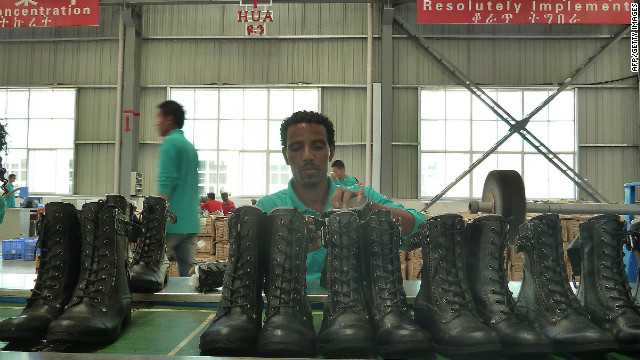
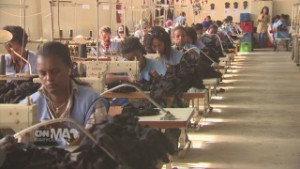
The Ethiopia-based factory exports around 20,000 pairs of shoes a month.The Ethiopia-based factory exports around 20,000 pairs of shoes a month.

HIDE CAPTION
Ethiopia's leather industry
<<
<
1
2
3
4
5
>
>>


STORY HIGHLIGHTS
  • Sheep skin from Ethiopia is particularly useful in making gloves
  • Ethiopia's 90-million cattle, sheep and goat population is one of the world's largest
  • Foreign firms are establishing factories in Ethiopia to take advantage of the national resources
CNN Marketplace Africa is a weekly show offering a unique window into African business on and off the continent
(CNN) -- The steady hum of sewing machines fills the air inside a large glovemaking factory on the outskirts of Addis Ababa, the bustling Ethiopian capital. Patches of leather move through an array of working stations as busy laborers work feverishly to meet the company's export quota: 5,000 gloves a day.
The operation belongs to Pittards, a UK-based company whose trading partnership with Ethiopia dates back to the early 1900s.
Here, hardy, durable cow hide is made into work gloves. These are ideal for builders and gardeners, and are mainly exported to the U.S.


Ethiopian fashion on the U.S. highstreet


Ethiopia: Agriculture to industry
And then there are the stylish designs -- created from a different type of animal skin, these are made to keep fingers warm in Tokyo, Paris and Rome.
"The fashion glove is made of sheep skin which is unique to Ethiopia," explains Tsedenia Mekbib, general manager at Pittards Products Manufacturing. "The durability, the stretch ability and the strength makes it popular for gloving leather specifically. That has been the one strength of Ethiopia and the leather sector."
Sophisticated designs with decorative touches may be the hallmark of this type of glove, but they must also be practical. Ethiopia's climate makes this animal skin effective at withstanding the winter chill -- an essential selling point.
And this effective material is in abundant supply. Ethiopia's 90-million cattle, sheep and goat population is one of the world's largest, according to the United Nations Industrial Development Organization.
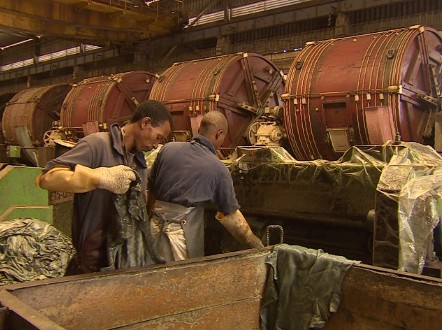
Pittards workers inside the tannery of the company's Ethiopia-based plant.
CNN
Creative process
What slips onto the customer's hand may be elegant, but the process to create the glove certainly is not.
It all starts in the tannery where workers -- dressed in aprons and thick, elbow-high protective gloves -- convert the raw animal hides and skins into finished leather through a number of processes.


Ethiopia's white honey goes global


Ethiopia's passionate beekeepers
Some of the steps include soaking the skin and fleshing it to remove any unwanted parts. A retanning process where the leather is colored is followed by a stage under a special vacuum dryer where the skin is dried and then stretched to increase its surface area.
Once all this has happened, another machine softens the leather to make it flexible -- an important feature of gloves. The end product, ready for export, is pure sheep skin prepared to be turned into gloves -- labeled with the thickness and the area it covers.
Export ban
In a move to encourage value addition and increase revenues generated by the leather sector, the Ethiopian government banned all exports of raw hides and skins in 1989. Between 2006 and 2012, the total value of Ethiopia's exports of leather and leather products grew from $66 million to $112 million.
And it's not just Pittards that have realized the opportunity to make gloves in Ethiopia. According to the Leather Industry Development Institute, two other factories in the country are focused on creating the hand garments.
Shoes is another major area which uses Ethiopian leather. The country is home to dozens of shoemaking companies, including local names such as Oliberte and international players like the Huajian Group, a Chinese company that has been exporting some 20,000 pairs of shoes a month since it launched its manufacturing facility outside Addis Ababa in 2012.
Business conditions
Despite a major focus to rapidly build its energy and transport infrastructure, Ethiopia is still struggling to provide the best conditions for businesses setting up shop in the country.
Having the solutions to these challenges would allow us to be competitive as a country and as a company as a whole.

Tsedenia Mekbib, Pittards
"The challenges that we encountered when we started business are from power cuts to logistics to foreign currency availability, to lead time in having available raw materials," explains Mekbib. "Having the solutions to these challenges would allow us to be competitive as a country and as a company as a whole."
Beyond these issues, international manufactures also struggle to recruit workers. Ethiopia's population is growing at a rate of 2.89%, placing it among the top 15 fastest growing populations in the world, according to theCIA Factbook.
But a large workforce and a skilled work force is not the same thing. In fact, Mekbib says "bridging the gap between the rest of the world and the skills set in Ethiopia on the ground has been the greatest challenge so far."
Another growth area, is the number of Ethiopians entering the middle class and showing a desire to buy high quality clothes. In a report published this month, the IMF said the country is on track to achieve its goal of reaching middle income status by 2025. The trend is so clear to Pittards that they are now targeting consumers inside the country.
But for Ethiopians, it's not just the top quality of the leather products that makes them take out their wallets, it's also access to a label they can call their own: made in Ethiopia.