
A New Economic Paradigm
Tuesday, February 10, 2015

Wednesday, February 4, 2015
Can Ethiopia’s Resource Wealth Contribute to its Growth and Transformation?
January 26, 2015
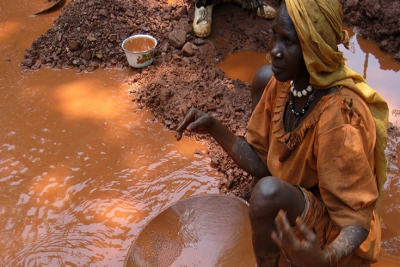
Women artisanal miner in Ethiopia´s Benishangul-Gumaz Región.
The World Bank Group
STORY HIGHLIGHTS
MULTIMEDIA
ADDIS ABABA, January 26, 2015 – Ethiopia has averaged a 10.7% economic growth rate over the last 10 years, more than double the annual average of countries in Sub-Saharan Africa, which was around 5.2%. However, despite having a huge potential to contribute to Ethiopia’s economy, the development of oil, gas, and mineral resources are not among the key drivers of the country’s growth.
Although the country has geological potential for the discovery of new, sizeable oil, gas and mineral deposits, most of its extractive industry is still in its infancy stage. Currently, there is one large-scale gold mine in operation, while a growing number of large mining projects are under development and exploration for oil and natural gas is intensifying after significant discoveries in neighboring countries. Ethiopia also has an extensive and unique artisanal mining sector; the government estimates there are around 1 million miners, making it an important source of job creation, and an important source of foreign currency.
Although the industry is in its infancy stage, the contribution to the country’s exports is already significant. In 2012, mining was responsible more than 19% of the total value of exports, and up to 10% of foreign exchange earnings. Gold makes close to 100% of mining exports and most of it, about 2/3, comes from artisanal mining, according to a recent World Bank Group (WBG) partner study, Strategic Assessment of the Ethiopian Mineral Sector.


The report notes that resource wealth can potentially have a positive impact on the social and economic development of Ethiopia if the industry is developed and managed in a sustainable and transparent manner, following international good practices.
What can Ethiopia do to ensure that its resource wealth contributes to sustainable development? The report highlights the following recommendations:
- Obtain good-quality geo-data and put in place an effective data management system: To to manage and plan for the industry, the government needs to know what is actually in the ground. Effective acquisition, maintenance and dissemination of geo-data can help to attract investment and can help governments to make informed decisions and negotiate more effectively. Currently, only 74% of Ethiopia is mapped at a low-quality scale.
- Put in place an effective management system and a governance framework: This will ensure that the benefits are distributed as fair and widely as possible, and social and environmental risks are minimized:Ethiopia was admitted as a candidate country to the Global Extractive Industries Transparency Initiative (EITI) in March 2014,one step towards that goal.
- Diversification of Ethiopia’s economy and facilitation of economic linkages to avoid heavy dependency on the resource wealth: The linkages that are being created between the potash and agricultural industries in the Afar Region is just one example of potential economic partnerships; supporting the production of potash fertilizers in order to increase small holder farmer’s crop production.
- Balance short-term and long-term development priorities, and reinvest the resource wealth into productive investments including high-quality health and education
Past experiences of other resource-rich countries provide a roadmap that can inform Ethiopia’s decision-making as the government start to put institutions, policies and laws in place to ensure that resource wealth contributes to sustainable development.
Developing the untapped potential of the extractive industry is not without its challenges, which include the possibility of increased corruption and the need to manage the potentially significant social and environmental impacts. Recognizing this, the WBG, along with other development partners, have joined together to support Ethiopia’s efforts to develop the industry in a clear and viable way.
“As highlighted in the study, if well managed and well supported, the Ethiopian mineral sector has the potential to make a difference in the economic development of Ethiopia and to contribute to the poverty reduction agenda,” said Christian Moller, WBG lead economist. “This will require a strong public sector. As the World Bank Group, we are committed to contribute to this process.”
In October 2014, the WBG and the Ministry of Mines jointly organized the 2014 Ethiopia Extractive Industries Forum, one of the major recent initiatives. It was organized with support from other key partners such as the UNDP, the Australian Government, Department of Foreign Affairs, Trade and Development (Canada), UK Department for International Development (DFID), and the African Minerals Development Center (AMDC). The event, the first of its kind, was held to help raise awareness about opportunities and challenges in the extractive industry, as well as to share good practices for its sustainable management. It included a broad-based representation of stakeholders with about 120 participants from industry, government, development partners, and civil society.
The forum also provided the opportunity to discuss the findings of the “Strategic Assessment of the Ethiopian Mineral Sector” study, which was jointly published by the Ministry of Mines and other development partners. The report represents the first comprehensive assessment of the Ethiopian mining industry, examining the primary opportunities and challenges for growth and transformation in mining, while also providing an initial analysis of policy options for Ethiopian decision makers.
“In today’s global village the Ethiopian government by itself cannot overcome the challenges facing the mining sector,” said His Excellency Ato Tolosa Shagi, Minister of the Ministry of Mines, in his opening speech during the forum. “Therefore, we would like to underpin our co-operation with development partners and best performing countries in the areas of building up the indigenous expertise with more emphasis in regulating the mineral and oil and gas resources to properly administer contracts as we are dealing with nonrenewable natural resources.”
The WBG is providing technical assistance to the Ethiopian government to support them in translating the recommendations of the report to build a competitive, predictable, and responsible strategy, legislative and institutional framework for the Oil, Natural Gas and Mining industry. This will allow the Ethiopian government to conclude better deals for the extraction on their oil and mineral resources in a way that maximizes the benefits to the country, reducing the risk of costly or politically difficult remediation at later stages. It is supported by the Extractive Industries Technical Advisory Facility (EI-TAF), a demand driven multi-donor trust fund. The EI-TAF will be launched in the beginning of 2015 and will help to structure extractive industry development projects and related policies.
Wednesday, January 28, 2015
Wednesday, January 21, 2015
Saturday, January 10, 2015
Ethiopia inflation jumps to 7.1 pct in December while the price oil under $ 60
Ethiopia's year-on-year inflation rose to 7.1 percent in December from 5.9 percent in the previous month, the statistics office said on Friday even at a time the price of oil price gone down under $60.
The Central Statistics Agency attributed the jump to higher prices of food and non-food items. Prices for such items as sugar, vegetables and fruit increased 6.5 percent last month, up from 4.8 percent in November.
Non-food inflation also rose, to 7.8 percent in December from 7.1 percent the previous month, mainly due to an increase in prices for clothes and khat, a narcotic leaf chewed in the Horn of Africa nation.
Inflation peaked at 9.1 percent in 2014 but it has since been moving up and down.
Thursday, January 1, 2015
Ethiopia: Booming business, underpaid workers - Features - Al Jazeera English
Low wages have attracted foreign players to the poor African country, but labourers are hoping for better salaries.Simona FoltynLast updated: 29 Dec 2014 11:22 | |||||
 Within a few years foreign companies have helped build up Ethiopia's nascent industry [Simona Foltyn/Al Jazeera] | |||||
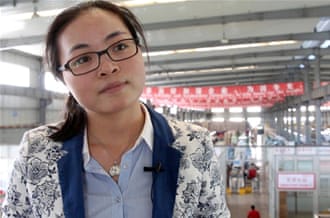
Addis Ababa, Ethiopia - Lunch break is over at the Huajian shoe factory and workers assemble in perfectly aligned two-row formations, march, salute, and return back to their work stations. "Our factory is a bit like a military organisation. The labour here is not highly educated so we have to use a very simple way to communicate and organise them," said Nara Zhou, Huajian's spokeswoman, as she walks through the aisles of the large factory hall.
Red banners with writing in Chinese, Amharic and English hang from the ceiling, bearing lofty slogans such as "China-Africa friendly and harmonious enterprise, to win honour for the country", and "High level of democracy". They are excerpts of speeches given by the company's president, Zhang Hua Rong, a former military officer who established Huajian's operation in Ethiopia in 2012, Zhou explained. Within a few years, foreign companies such as Huajian have helped build up Ethiopia's nascent footwear industry from scratch. Today, the company employs about 3,000 workers in Ethiopia and generates $20m worth of exports by producing shoes for international brands such as Guess, Naturalizer and Toms destined for US and European markets. With a growing number of brands such as H&M starting to source from Ethiopia and existing companies ramping up production capacity, the three percent of Ethiopia's exports that came from textiles and leather in 2013 may well double in the next couple of years, according to government estimates. Cheaper than Asia Rising production costs in Asia are the key drivers prompting manufacturers such as Huajian to look for alternative production sites. Ethiopia seems to be ticking many of the boxes for investors: abundant cheap labour, no tariffs, and a stable political environment. Entry-level salaries in Ethiopia range from $35 to $40 per month, significantly below average Chinese manufacturing wages of $629 per month, a figure reported to have tripled between 2000 and 2010. In Bangladesh, textile workers are required to earn at least $68 per month, which represents an increase in minimum wages following the deadly collapse of a factory building in April, and criticism of working conditions there. Ethiopia, however, has no minimum wage except for public servants.
"We do have a labour law in this country, which is in line with international standards, but the government will not actually intervene in setting the minimum wage," Aklilu Woldemariam, director of investment promotion at Ethiopia's Investment Agency, told Al Jazeera. The absence of a minimum wage means that market dynamics determine the salaries of factory workers. With urban unemployment at about 18 percent, workers must often accept whatever wage is offered, or have no income at all. "I am happy I have a job but if I had an option, I wouldn't work for this amount of money and under these conditions," said Meseret Asrat, a 24-year-old employee at Ayka Textiles in the capital Addis Ababa. Asrat earns $41 per month after the factory's recent wage increase. Struggle for workers' rights Despite demands for higher wages and better health and safety standards, Ayka is considered a success story when it comes to workers' rights in Ethiopia. The country's biggest garment exporter and an employer of 8,000 workers, Ayka is also one of few textile and leather factories to have established a functional trade union. "In the beginning it was difficult to establish the union. The management didn't want the workers to unite and speak with a common voice," said Mesfin Teshome, who leads Ayka's trade union. Following pressure from Ayka's German client Tchibo and a change in the company's management, the union won a 25-percent wage increase in a collective bargaining agreement negotiated last year. But winning further salary increases remains a challenge, Teshome said, partly because the company's profits are not made public.  Although Ethiopia's constitution guarantees workers the right to associate, most factories, including Huajian, do not have trade unions. "If the business owners refuse, there is not much we can do," Angesom Gebre Yohannes from the Industrial Federation of Ethiopian Textile, Leather and Garment Worker Trade Unions, told Al Jazeera. "The law is there, but the struggle to implement it is left up to us and the workers." The union currently employs four full-time staff and lacks the resources and political weight to lobby big businesses, let alone take them to court over alleged violations of wages and working conditions. Often, pressure by foreign clients and consumers is the only way to ensure better conditions for workers. "Big foreign buyers, like in the case of Tchibo, can have a big contribution towards workers' rights," Yohannes said. Invest now, worry later? Between 2010 and 2014, Ethiopia's economy grew at an impressive 10.4 percent annual rate, driven mainly by large public expenditures under the umbrella of an ambitious Growth and Transformation Plan (GTP). The plan seeks to transform Ethiopia into a middle-income country by 2025. As part of the GTP, selected industries such as textiles and leather with high-growth potential have been prioritised for foreign investment.
"This is the formative stage of the manufacturing sector," said Dereje Feyissa Dori, senior adviser and research professor at the International Law and Policy Institute office in Addis Ababa. "Investors are charting into new territories, so there must be something to entice them." For that reason, the government is sceptical about introducing a minimum wage, which might scare away investors said Dori. Union representatives say monthly wages should be 2,000 birr ($100), twice as high as today's entry-level wages. Low salaries are often attributed to relatively low productivity and cost of living. But for Ethiopia - a country where 29.6 percent of the population still lives below the poverty line - a shift will be needed if it is to become a middle-income country by 2025, as envisioned by the GTP. "It's not a question of if but when the government will approach investors to discuss more corporate social responsibility," said Dori. Trade unions and some business owners say ensuring reasonable wages and working conditions would make the industry more sustainable and avoid disruptions further down the line. "If the government takes the necessary measures in the beginning, the industry will not be disturbed later on like we see it in the experiences of Far East Asia," Ercan Tukoglu, the general manager of Ayka Textiles, told Al Jazeera. | |||||
Source: Al Jazeera | |||||



Ethiopia: Booming business, underpaid workers - Features - Al Jazeera English
Low wages have attracted foreign players to the poor African country, but labourers are hoping for better salaries.Simona FoltynLast updated: 29 Dec 2014 11:22 | |||||
Within a few years foreign companies have helped build up Ethiopia's nascent industry [Simona Foltyn/Al Jazeera] | |||||
Addis Ababa, Ethiopia - Lunch break is over at the Huajian shoe factory and workers assemble in perfectly aligned two-row formations, march, salute, and return back to their work stations. "Our factory is a bit like a military organisation. The labour here is not highly educated so we have to use a very simple way to communicate and organise them," said Nara Zhou, Huajian's spokeswoman, as she walks through the aisles of the large factory hall.
Red banners with writing in Chinese, Amharic and English hang from the ceiling, bearing lofty slogans such as "China-Africa friendly and harmonious enterprise, to win honour for the country", and "High level of democracy". They are excerpts of speeches given by the company's president, Zhang Hua Rong, a former military officer who established Huajian's operation in Ethiopia in 2012, Zhou explained. Within a few years, foreign companies such as Huajian have helped build up Ethiopia's nascent footwear industry from scratch. Today, the company employs about 3,000 workers in Ethiopia and generates $20m worth of exports by producing shoes for international brands such as Guess, Naturalizer and Toms destined for US and European markets. With a growing number of brands such as H&M starting to source from Ethiopia and existing companies ramping up production capacity, the three percent of Ethiopia's exports that came from textiles and leather in 2013 may well double in the next couple of years, according to government estimates. Cheaper than Asia Rising production costs in Asia are the key drivers prompting manufacturers such as Huajian to look for alternative production sites. Ethiopia seems to be ticking many of the boxes for investors: abundant cheap labour, no tariffs, and a stable political environment. Entry-level salaries in Ethiopia range from $35 to $40 per month, significantly below average Chinese manufacturing wages of $629 per month, a figure reported to have tripled between 2000 and 2010. In Bangladesh, textile workers are required to earn at least $68 per month, which represents an increase in minimum wages following the deadly collapse of a factory building in April, and criticism of working conditions there. Ethiopia, however, has no minimum wage except for public servants.
"We do have a labour law in this country, which is in line with international standards, but the government will not actually intervene in setting the minimum wage," Aklilu Woldemariam, director of investment promotion at Ethiopia's Investment Agency, told Al Jazeera. The absence of a minimum wage means that market dynamics determine the salaries of factory workers. With urban unemployment at about 18 percent, workers must often accept whatever wage is offered, or have no income at all. "I am happy I have a job but if I had an option, I wouldn't work for this amount of money and under these conditions," said Meseret Asrat, a 24-year-old employee at Ayka Textiles in the capital Addis Ababa. Asrat earns $41 per month after the factory's recent wage increase. Struggle for workers' rights Despite demands for higher wages and better health and safety standards, Ayka is considered a success story when it comes to workers' rights in Ethiopia. The country's biggest garment exporter and an employer of 8,000 workers, Ayka is also one of few textile and leather factories to have established a functional trade union. "In the beginning it was difficult to establish the union. The management didn't want the workers to unite and speak with a common voice," said Mesfin Teshome, who leads Ayka's trade union. Following pressure from Ayka's German client Tchibo and a change in the company's management, the union won a 25-percent wage increase in a collective bargaining agreement negotiated last year. But winning further salary increases remains a challenge, Teshome said, partly because the company's profits are not made public. Although Ethiopia's constitution guarantees workers the right to associate, most factories, including Huajian, do not have trade unions. "If the business owners refuse, there is not much we can do," Angesom Gebre Yohannes from the Industrial Federation of Ethiopian Textile, Leather and Garment Worker Trade Unions, told Al Jazeera. "The law is there, but the struggle to implement it is left up to us and the workers." The union currently employs four full-time staff and lacks the resources and political weight to lobby big businesses, let alone take them to court over alleged violations of wages and working conditions. Often, pressure by foreign clients and consumers is the only way to ensure better conditions for workers. "Big foreign buyers, like in the case of Tchibo, can have a big contribution towards workers' rights," Yohannes said. Invest now, worry later? Between 2010 and 2014, Ethiopia's economy grew at an impressive 10.4 percent annual rate, driven mainly by large public expenditures under the umbrella of an ambitious Growth and Transformation Plan (GTP). The plan seeks to transform Ethiopia into a middle-income country by 2025. As part of the GTP, selected industries such as textiles and leather with high-growth potential have been prioritised for foreign investment.
"This is the formative stage of the manufacturing sector," said Dereje Feyissa Dori, senior adviser and research professor at the International Law and Policy Institute office in Addis Ababa. "Investors are charting into new territories, so there must be something to entice them." For that reason, the government is sceptical about introducing a minimum wage, which might scare away investors said Dori. Union representatives say monthly wages should be 2,000 birr ($100), twice as high as today's entry-level wages. Low salaries are often attributed to relatively low productivity and cost of living. But for Ethiopia - a country where 29.6 percent of the population still lives below the poverty line - a shift will be needed if it is to become a middle-income country by 2025, as envisioned by the GTP. "It's not a question of if but when the government will approach investors to discuss more corporate social responsibility," said Dori. Trade unions and some business owners say ensuring reasonable wages and working conditions would make the industry more sustainable and avoid disruptions further down the line. "If the government takes the necessary measures in the beginning, the industry will not be disturbed later on like we see it in the experiences of Far East Asia," Ercan Tukoglu, the general manager of Ayka Textiles, told Al Jazeera. | |||||
Source: Al Jazeera | |||||
Subscribe to:
Posts (Atom)