Djibouti and Ethiopia have signed $1.55 billion deal for the construction of a fuel pipeline between the two countries. The deal was made between the two countries as well as the developers Mining, Oil & Gas Services and Blackstone Group LP-backed Black Rhino Group.
The agreement states that the pipeline will be 550 kilometres which will be used to transport diesel, gasoline and jet fuel from Damerjog port in Djibouti to Awash terminal in central Ethiopia. The completion of the pipeline is scheduled for 2018. The project also includes an import facility with the storage capacity of 950,000 barrels in the Djibouti port, which will be linked, to the 20-inch diameter pipe leading the depot in Ethiopia. The pipe will be capable of handling 240,000 barrels of fuel a day, according to The East African.
“The pipeline will increase energy security, aid economic development and reduce harmful emissions,” Brian Herlihy said, the Chief Executive Officer of Black Rhino.
Currently, fuel products are transported via 800 kilometres of roads from Djibouti port to the Ethiopian depot travelling through mountainous areas, reported The East African. The construction of the pipeline is expected to make the transport of the products for efficient for the two countries.
“The Horn of Africa project will sustain the momentum of economic growth and growing fuel demand in both Djibouti and Ethiopia by enabling high-quality, consistent energy supply at reasonable cost points,” Mining Oil and Gas Services Chief Executive Officer Errol Gregor said.
Growth in Ethiopia has surpassed all other Sub-Saharan countries in the past decade and the government is boosting its spending in order to increase infrastructure, according to the Mail and Guardian Africa. Not only has Ethiopia invested in its own future, but the two countries are working together to invest in joint infrastructure in order to make the area the logistics hub for the continent. Before that however, it seems that the plan will provide a gateway for resources in Eastern and Central Africa.
The Djibouti-Ethiopia agreement appears to be casting a shadow over the much-hyped Kenyan Lamu Port Southern Sudan-Ethiopia Transport Corridor (LAPSSET).
ADDIS ABABA -- So we got used to "Made in Japan," "Made in China," "Made in Hong Kong" and most recently "Made in Vietnam." There's going to be a new kid in town, but he's not Asian. Prepare yourselves for "Made in Ethiopia."
Much has been written about the "BRIC" countries -- Brazil, Russia, India and China - saying these giants would lead the new world economy. And certainly to some extent, they are. However, the next wave may well be the "EMIC" countries - Ethiopia, Myanmar, Iran and Colombia. I wrote about the prospect of EMIC coming on strong last summer.
With this in mind, I ventured to Ethiopia to investigate further the economic and sustainability potential of this large and populous nation. Ethiopia is best known for its deceased long-term ruler, Haile Selassie, who was credited with embracing multilateralism and Collective Security which led to Ethiopia becoming a charter member of the U.N. While he passed in 1975, he is still a national hero and is widely hailed as the face of the first free nation in Africa. In the early 70s, with the cold war and socialist/Marxist views spreading across the globe, the disenfranchised sector of the Ethiopian population namely the farmer, with the support of the young university students started revolting. Soon, a handful of army leaders joined in the anti-monarchy movement which quickly led to the demise of the Haile Selassie regime, replaced by the Derg Regime, which some call, one of the most violent regimes in Ethiopian history. The Derg ruled the country from 1973 to 1992 until it was ousted by the EPRDF (Ethiopian People's Revolutionary Democratic Front) which still leads the country following ethnic federalism ideology and a market led economy. The country of 90 million is now truly independent, and while still technically an LDC, or less developed country, the EPRDF is on a mission to bring long term, sustainable economic growth and expansion. I found that while it is not open season for "carpetbaggers," anyone with a great business idea that can help elevate Ethiopia's economy will have a legitimate shot at admission.
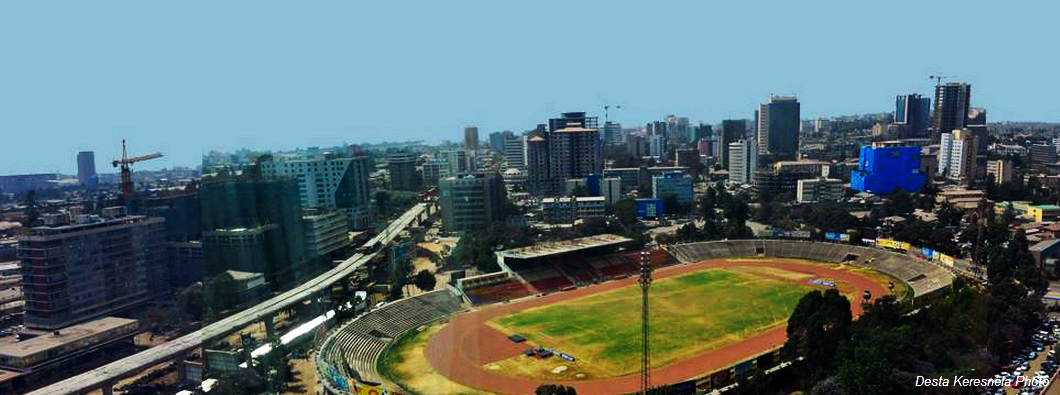
View of Addis Ababa skyline
I started my due diligence on how things have changed with a member of the Ethiopian diaspora, San Diego-based entrepreneur, Feben Yohannes. Upon reentering Addis Ababa after 15 years of absence, she commented, "My people have much to be proud of, the development that has occurred over the past 15 years is by Ethiopians, for Ethiopians. And knowing that Rome wasn't built in a day, the city will continue to improve." She was visibly awestruck by the airport expansion, extensive roads, bridges and freeways constructed or currently under way.
Feben Yohannes, San Diego-based entrepreneur, with her mother Desta Hagos, an artist living is Addis Ababa
She also noted, "kids on the street looked clean, well-fed and well-dressed compared to 15 years ago. The heart of the city is beating with an air of opportunity. Addis used to be the playground for the few, now it is a thriving cosmopolitan city for the masses, this makes me very happy."
Next I looked for boots on the ground, folks ingrained in the community. "Ethiopia is serious about forming a green economy," says Omar Bagersh, scion of a family that has conducted business in Ethiopia for three generations. "The government wants to do manufacturing the right way, with an eye toward sustainable processes and truly green materials with little byproduct or waste. We want to safeguard our trees and foliage, and new development will only be allowed after careful environmental scrutiny. At the same time, we are attempting to create a self-sufficient economy and feeding our people is of primary importance. Thus while we are very conscious of GMOs, we have to feed many people and the need is urgent so while organic farming is preferred, other options may be considered." Thus there exists a natural tension between sweeping development vs. sustainable development that will be good for the environment as well as the population in the long term.
Bagersh was educated in the U.S. He and his family are primarily engaged in running coffee plantations, among other businesses. I visited him in his spacious Addis Ababa home, decorated with gorgeous African artwork and looked after by a generous fulltime staff. "We are entering the next phase of our Growth and Transformation Plan (aka GTP2)," Bagersh explains. "This reflects the government's desire to build and strengthen the private sector leading to more jobs. Foreign investment is encouraged, and this will be supported by additional public sector spending. Addis Ababa suffers from pollution; the government is aware of this and wants to eradicate this problem." I did get the feeling that the regime will not allow environmental abuses such as strip mining, and that it will definitely not be open season for anyone with a checkbook. Indeed, the government's vetting process for new businesses from abroad is time consuming, detailed and slow-moving, which can be frustrating to many investors. Thus patience is a virtue in this regard.
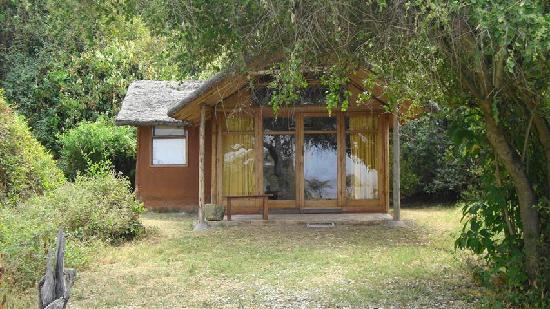
Bishangari Lodge, an eco lodge owned by Omar Bagersh
That said, the Chinese have a huge head start on the West in terms of investment and this is visibly apparent. China is building roads, schools, hospitals and other infrastructure in a highly noticeable way throughout the Addis Ababa metro area. One can assume that in return, they have negotiated a mutually beneficial relationship in industry, agriculture, as well as real estate projects. "We are open to Western investment but many deals are just now in the feasibility stage. Meanwhile, Chinese investments are making sizable investments that are directly impacting the lives of our citizens," Bagersh said.
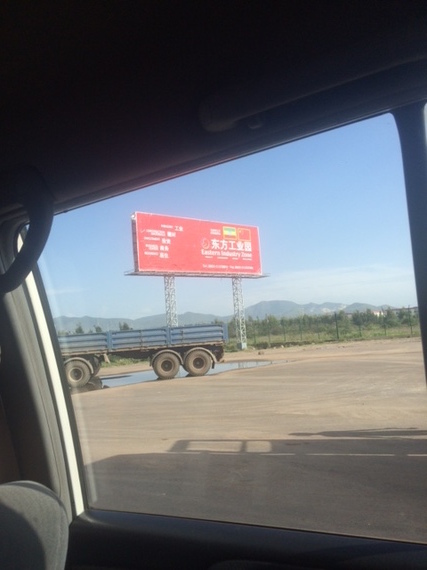
A Chinese industrial zone on the outskirts of Addis Ababa. The Ethiopian flag neighboring the Chinese flag is emblematic of the growing synergy between the business communities in both nations.
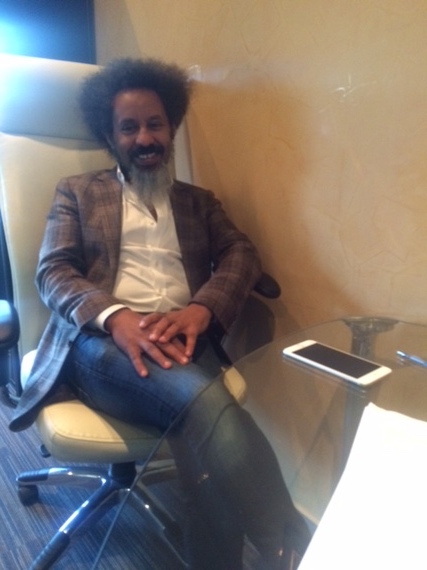
A few moguls of Ethiopian business do exist, among them is Mulugeta (aka known as Mole by close friends), who has interests in real estate development, night clubs, mining, logistics and stone quarries. Although diminutive in stature, Mulugeta cuts a striking figure nonetheless with his lengthy white beard and Gucci wardrobe. His office is sleek and filled with large format oil paintings by many of Africa's most noted artists; his collection of African art is said to be among the best on the continent. He was educated in the U.S. and has been in Ethiopia for 18 years. Among his varied interests is a local winery, with his partner, rock musician and entrepreneur Bob Geldof. He employs over 2,000 people combined, and is married with five children. "We have very little crime here," Mulugeta states definitively. "Electricity is very cheap. Our government is stable. Our people want to work...we want to feed ourselves. Our education system is beginning to produce results. The government is providing healthcare and trying to teach the principles of birth control. If not for this, our population would be over 120 million already. So we are making progress. We need infrastructure and we want foreign investment."
Mulugeta, business tycoon, in his element at his office surrounded by African emerging art
I also wanted to speak with an expatriate living in Ethiopia. Who better than a fair skinned, blonde German named Frank Michel. 50ish Frank runs a mid-sized IT business in Addis. He is married to an Ethiopian woman and has lived between Addis Ababa and Munich for 23 years. "Ethiopia has averaged 9 percent GNP growth over the last decade, which is among the highest in the world. This should hopefully lead to what we need most here, which is the emergence of a legitimate middle class. The government here would love to elevate a significant percentage of its population to this level," Michel said.
Frank Michel with his Ethiopian wife, Messie
Of the 90 million Ethiopians, about six million reside in the Addis metro area. Average income here is about $50 per month, and while the cost of living is proportional to this, over 29% are still living below any type of measurable poverty level (World Bank, 2010). There is a broad and growing network of schools and universities, and while the Ethiopians are proud of this, the literacy and depth of knowledge of their graduates still pales in comparison to Western education, thus many high performers seemingly seek out schools abroad. This is a key factor for foreign investors, as in, is there a capable, educated, trainable base of employees that can be hired to run and staff your Ethiopian branch?
So what is Ethiopia really like? Meaning, could someone from a large American city make a go of it here? The answer is, only if you are adventurous, flexible, have a stomach for exotic spices and very different foods, and can appreciate the growing pains of an economy in transformation. Power outages are frequent, rainy season is sometimes relentless, neither motorized transportation nor the roads are anywhere near what we are accustomed to, and "luxury" accommodations are not readily available. (I stayed at a Hilton which was a decently appointed business and expat hostelry...as is the Addis Ababa Sheraton which was costlier and a bit nicer but sorry no Aman or Four Seasons...yet). The food is different, strongly spiced, and one has to be careful with the fresh fruits and vegetables as some are not grown and washed to our cleanliness standards - I noticed that even the locals will eat them only at certain restaurants that boast organic veggies. Meats are a central part of the diet, along with injera, an Ethiopian bread made from teff flour that serves as a tasty crepe-like shell for "tibs" (Ethiopian filet) and/or "shiro" (Ethiopian lentils). A good strong 4x4 vehicle is recommended as roads are often unpaved, filled with potholes, and generally very rough. Public transportation is also sporadic at best.
The people of Ethiopia seem happy and proud of their country. They are open and friendly to Americans. They express a willingness to work with foreign business interests if new jobs can be created. They are artistic, with many interesting takes on indigenous painting, sculpture and crafts...the best of which command Western pricing. They do speak English although Ethiopia has a staggering 88 languages and 200 dialects. Amharic is known as the official language of the country and is a bit similar to Arabic. A variety of different dialects are spoken throughout the many villages that dot the hinterlands.
Perhaps most importantly, I really did get the feeling that the Ethiopian government cares about its citizens and wants to feed them, wants to get them jobs, wants to educate them, wants to teach them family planning, and more. Which is a lot different from other developing countries that exist primarily to line the pockets of their dictator-leaders and their cronies, at the expense of the actual citizens whom the aid was intended for. While there is rumor of a large "secret police" force, and in a recent election the EPRDF received 100 percent of the vote, I have no evidence other than my impressions but it seems to me that the government has support of its citizens not by fear of the sword but by its desire to provide better lives for the citizens of Ethiopia. What a concept!
In July 2015, Ethiopia released a summary of its forthcoming Livestock Master Plan (LMP), which is the governmental blueprint for directing the continued transformation of the country’s livestock sector. The LMP’s implementation is intended to strengthen the livestock sector, enhance Ethiopia’s nutritional and food security situation, improve resilience, and spur economic growth that will lift nearly 2.36 million households out of poverty. The LMP could spur demand for certain imported feed inputs (e.g. soy), some of which may come from the United States.
A concerned Citizen and Graduate Student of Political Science at University of Passau
If you ask "Is Ethiopia rising?" the answer will most likely depend on who you are asking. If you ask a regular follower of the country's public media outlets, the answer will be an astounding yes! The same question posed to someone who gets his reports from the independent media and social media activists, will elicit a flagrantly different response, something to the effect that the country is not making any tangible progress and that it is rather engaging in huge infrastructural projects to camouflage and mask the underlying poverty.
The disagreement from these two groups often comes from misunderstanding of what economic growth represents and how it differs from development.
Economic growth is simply an increase in the amount of goods and services produced in a country over a given period of time, it is commonly measured through Gross Domestic Product (GDP). Essentially, any activity that involves the transaction of values, however of no use or even harmful to human life, will have an increasing effect on the GDP. But, Economic development refers to the sustained improvement in living conditions, citizen's self-esteem, meeting of basic needs and enabling of a free and just society.
Based on the above criteria, it is beyond argument that Ethiopia's GDP has been growing at a notable growth rate over the past decade. A recent report by IMF also ranks Ethiopia among the five fastest growing economies in the world.
The objective of this article is to understand the sources of the growth and analyze whether the growth has been (or will be) translated into sustainable improvement in the wellbeing of citizens.
Why should we question the good news of fast economic growth? you may ask. The reason for maintaining skepticism is because history is replete with examples where economic growth was not followed by similar progress in human development. Instead growth was achieved at the cost of greater inequality, higher unemployment and weakened democracy.For example. a report by Save the Children has shown In Nigeria GDP per capita has increased by 51 per cent since 2000, but extreme income poverty has risen by 8 per cent, as has income inequality.
Two major factors are the key drivers behind Ethiopia's recent growth success. When one takes a closer look at Ethiopia's growth figures it is easy to spot that the most determining factor for such high growth rates -- the very small size of the economy. In fact when the double digit growth rate started in 2004, the country's GDP was a comparatively meagre $10 billion, which was much lower than the $13.4 billion thirteen years before in 1991. Factors such as poor policy environment as the incumbents then sought to consolidate power in the post-civil war era, border conflicts with Eritrea and droughts have combined to cause a long term economic recession. Thus, the initial few years of fast GDP growth represents recovery from this long period of recession.
Secondly, Ethiopia's fast economic growth is owed to the unprecedented level of public investments in infrastructural schemes and public enterprises. According to the World Bank, Ethiopia's public investment rate is the third highest in the world, while private investment rate is the sixth lowest. So far, growth has been dominated by public investment driven by a combination of foreign aid, easy access to foreign borrowing particularly from China and non-tradable services in particular construction, transport, and hotels and retail stores.
The public investment-led development has delivered high growth rates in the past and will continue as a key driver to maintain the trend. The federal government recently approved an $11.1 billion budget for the 20015/16 fiscal year, up by nearly 25 per cent from the previous year. Similarly the Addis Ababa city administration has approved $1.6 billion budget which is also 14 per cent higher than the year before. When combined, these total of $3 billion increase amount to about 6 per cent of the country's current GDP. Aided by more investments by State Owned Enterprises, the government can almost guarantee, with or without any increase in investment or productivity from other sectors, that the high growth rate will continue.
Growth, Transformation and Sustainable Development
The government's developmental state model is said to be taken after the East Asian tiger's experience. East Asian countries grew rapidly by replicating, in a much shorter time frame, what today's advanced countries did following the Industrial Revolution. They turned their farmers into manufacturing workers, diversified their economies, and exported a range of increasingly sophisticated goods.
As impressive as Ethiopia's growth is, it has not been accompanied by transformations that can translate into sustained poverty reduction. The Ethiopian economy is still dominated by agriculture. Slight change in structure has emerged due to the growth in services, rather than the growth that was hoped for in industry, particularly manufacturing.
To accelerate the transformation process the government targets export-led industrialization through exposition of labor intensive low skill manufacturing industries. Although encouraging work has been done in terms of attracting foreign investment, a lot more is needed to be done to bring tangible change on with regards to the structure of the economy.
the issue of equitable distribution of gains is no different. So far the gains from the growth seem to be concentrated in the hands of the few. A research firm based in South Africa reported, the number of US-dollar millionaires in Ethiopia rose by 108 percent between 2007 and 2013 - faster than in any other country in African.Similarly, The Ethiopian customs and revenue department recently reportedthat nearly 65 percent of Ethiopia's tax revenue came from fewer than 1,000 individuals in 2014.
The dramatic rise in the price of major consumer products particularly in 2005/6 and 2010/11 has made the poor's life very difficult leading to struggles to keep their children in school. A report quoting The Ministry of Education has reported Grade Five to Grade Eight drop out of schools more than ever before. About 40 percent were dropping out because "they could not continue classes due to poverty-related reasons."
Another major reason to question the "Ethiopia rising" narrative is the role of democracy and good governance in the process. Despite being endorsed as a democratically elected government by Barack Obama during his recent visit to the country, the Ethiopian government has been criticized for being increasingly autocratic and designing a systems that reward party members and affiliates to the exclusion of dissidents.
These concerns are also shared by citizens. A poll published in 2008 by Gallup reveals, fewer than 3 in 10 Ethiopians express trust in the national government, and the judiciary fares as poorly, eliciting confidence from about one-quarter of respondents. But participatory politics prompt the lowest levels of trust, as only 13 percent of Ethiopians have confidence in the honesty of elections. There is no much evidence to suggest citizen's confidence and trust in their government and institutions have improved since.
In conclusion, the fast economic growth that has been witnessed in Ethiopia so far is a good reason to be hopeful. However, it is too early to call it a miracle. There is a lot of homework to be done if this growth is to be sustained and more importantly translated into development. Improving the bureaucratic environment to make doing business easier should be a top priority, so should introducing a transparent and accountable business environment to control tax evasion and corruption. The government should also provide more space for the private sector to take the lead in the industrialization process.
Finally and most importantly, building national consensus to move forward as a nation is a must. As the former mayor-elect of Addis Ababa and now a rebel leader Professor Birhanu Nega once said "if you can't get your politics right, you can't get your economy right. A country may obtain short-term goals but without inclusive, broad-based Political structure, growth isn't sustainable".
If you ask "Is Ethiopia rising?" the answer will most likely depend on who you are asking. If you ask a regular follower of the country's public media outlets, the answer will be an astounding yes! The same question posed to someone who gets his reports from the independent media and social media activists, will elicit a flagrantly different response, something to the effect that the country is not making any tangible progress and that it is rather engaging in huge infrastructural projects to camouflage and mask the underlying poverty.
The disagreement from these two groups often comes from misunderstanding of what economic growth represents and how it differs from development.
Economic growth is simply an increase in the amount of goods and services produced in a country over a given period of time, it is commonly measured through Gross Domestic Product (GDP). Essentially, any activity that involves the transaction of values, however of no use or even harmful to human life, will have an increasing effect on the GDP. But, Economic development refers to the sustained improvement in living conditions, citizen's self-esteem, meeting of basic needs and enabling of a free and just society.
Based on the above criteria, it is beyond argument that Ethiopia's GDP has been growing at a notable growth rate over the past decade. A recent report by IMF also ranks Ethiopia among the five fastest growing economies in the world.
The objective of this article is to understand the sources of the growth and analyze whether the growth has been (or will be) translated into sustainable improvement in the wellbeing of citizens.
Why should we question the good news of fast economic growth? you may ask. The reason for maintaining skepticism is because history is replete with examples where economic growth was not followed by similar progress in human development. Instead growth was achieved at the cost of greater inequality, higher unemployment and weakened democracy.For example. a report by Save the Children has shown In Nigeria GDP per capita has increased by 51 per cent since 2000, but extreme income poverty has risen by 8 per cent, as has income inequality.
Two major factors are the key drivers behind Ethiopia's recent growth success. When one takes a closer look at Ethiopia's growth figures it is easy to spot that the most determining factor for such high growth rates -- the very small size of the economy. In fact when the double digit growth rate started in 2004, the country's GDP was a comparatively meagre $10 billion, which was much lower than the $13.4 billion thirteen years before in 1991. Factors such as poor policy environment as the incumbents then sought to consolidate power in the post-civil war era, border conflicts with Eritrea and droughts have combined to cause a long term economic recession. Thus, the initial few years of fast GDP growth represents recovery from this long period of recession.
Secondly, Ethiopia's fast economic growth is owed to the unprecedented level of public investments in infrastructural schemes and public enterprises. According to the World Bank, Ethiopia's public investment rate is the third highest in the world, while private investment rate is the sixth lowest. So far, growth has been dominated by public investment driven by a combination of foreign aid, easy access to foreign borrowing particularly from China and non-tradable services in particular construction, transport, and hotels and retail stores.
The public investment-led development has delivered high growth rates in the past and will continue as a key driver to maintain the trend. The federal government recently approved an $11.1 billion budget for the 20015/16 fiscal year, up by nearly 25 per cent from the previous year. Similarly the Addis Ababa city administration has approved $1.6 billion budget which is also 14 per cent higher than the year before. When combined, these total of $3 billion increase amount to about 6 per cent of the country's current GDP. Aided by more investments by State Owned Enterprises, the government can almost guarantee, with or without any increase in investment or productivity from other sectors, that the high growth rate will continue.
Growth, Transformation and Sustainable Development
The government's developmental state model is said to be taken after the East Asian tiger's experience. East Asian countries grew rapidly by replicating, in a much shorter time frame, what today's advanced countries did following the Industrial Revolution. They turned their farmers into manufacturing workers, diversified their economies, and exported a range of increasingly sophisticated goods.
As impressive as Ethiopia's growth is, it has not been accompanied by transformations that can translate into sustained poverty reduction. The Ethiopian economy is still dominated by agriculture. Slight change in structure has emerged due to the growth in services, rather than the growth that was hoped for in industry, particularly manufacturing.
To accelerate the transformation process the government targets export-led industrialization through exposition of labor intensive low skill manufacturing industries. Although encouraging work has been done in terms of attracting foreign investment, a lot more is needed to be done to bring tangible change on with regards to the structure of the economy.
the issue of equitable distribution of gains is no different. So far the gains from the growth seem to be concentrated in the hands of the few. A research firm based in South Africa reported, the number of US-dollar millionaires in Ethiopia rose by 108 percent between 2007 and 2013 - faster than in any other country in African.Similarly, The Ethiopian customs and revenue department recently reportedthat nearly 65 percent of Ethiopia's tax revenue came from fewer than 1,000 individuals in 2014.
The dramatic rise in the price of major consumer products particularly in 2005/6 and 2010/11 has made the poor's life very difficult leading to struggles to keep their children in school. A report quoting The Ministry of Education has reported Grade Five to Grade Eight drop out of schools more than ever before. About 40 percent were dropping out because "they could not continue classes due to poverty-related reasons."
Another major reason to question the "Ethiopia rising" narrative is the role of democracy and good governance in the process. Despite being endorsed as a democratically elected government by Barack Obama during his recent visit to the country, the Ethiopian government has been criticized for being increasingly autocratic and designing a systems that reward party members and affiliates to the exclusion of dissidents.
These concerns are also shared by citizens. A poll published in 2008 by Gallup reveals, fewer than 3 in 10 Ethiopians express trust in the national government, and the judiciary fares as poorly, eliciting confidence from about one-quarter of respondents. But participatory politics prompt the lowest levels of trust, as only 13 percent of Ethiopians have confidence in the honesty of elections. There is no much evidence to suggest citizen's confidence and trust in their government and institutions have improved since.
In conclusion, the fast economic growth that has been witnessed in Ethiopia so far is a good reason to be hopeful. However, it is too early to call it a miracle. There is a lot of homework to be done if this growth is to be sustained and more importantly translated into development. Improving the bureaucratic environment to make doing business easier should be a top priority, so should introducing a transparent and accountable business environment to control tax evasion and corruption. The government should also provide more space for the private sector to take the lead in the industrialization process.
Finally and most importantly, building national consensus to move forward as a nation is a must. As the former mayor-elect of Addis Ababa and now a rebel leader Professor Birhanu Nega once said "if you can't get your politics right, you can't get your economy right. A country may obtain short-term goals but without inclusive, broad-based Political structure, growth isn't sustainable".
Kenya and Uganda have agreed on a route for a 1,500-km (930-mile) pipeline to pump oil from Uganda to the Indian Ocean, a project that officials hope will transform East Africa into a major oil exporting region.
The path—to serve Kenya, Uganda, South Sudan, and potentially Ethiopia—has been the subject of dispute between Kenyan and Ugandan officials since last year. It will cut through northern Kenya and the Lokichar Basin from Hoima in western Uganda before reaching the port city of Lamu.
An alternative route had the pipeline snaking through Kenya’s capital of Nairobi and on to Mombasa, a plan that Ugandan officials said would be cheaper, but would have required displacing hundreds of residents.
Kenyan and Ugandan officials have agreed on a northern route for the pipeline, through northwestern Kenya to the port of Lamu.("Leveraging Oil and Gas Industry for the Development of a Competitive Private Sector in Uganda," World Bank, March 2015.)
The pipeline is part of a broader regional project, the Lamu Port Southern Sudan-Ethiopia Transport Corridor, to bring Ugandan and Kenyan oil to global markets. Uganda is home to sub-Saharan Africa’s fourth-largest supply of crude oil, with as much as 6.5 billion barrels discovered a decade ago. Kenya is home to about one billion barrels. Another proposed project would connect oil from South Sudan and Ethiopia to the pipeline.
But the project is not without its risks. Falling oil prices have derailed other less challenging projects. The pipeline will be the world’s longest heated oil pipeline (pdf, p. 45) as well as one the region’s most ambitious infrastructure projects. (Because Ugandan and Kenyan oil is waxy, it will have to be constantly heated.)
The pipeline will likely have to travel through swamplands, national parks, and wildlife reserves, and parts of northern Kenya that are vulnerable to attacks by bandits or Islamist militants, according to consultancy BMI Research, which estimates the pipeline won’t be ready before 2020. A lack of skilled labor, poor electricity supply, and the difficulty of importing material and machinery into landlocked Uganda are other obstacles.
It’s also not clear who will bear the costs of the pipeline, which authorities said is still subject to financing and security guarantees. The project is estimated to cost around 404.8 billion Kenyan shillings ($4 billion)—the World Bank has pledged just 54 million shillings.
The country has invested billions in Ecuador and elsewhere, using its economic clout to win diplomatic allies and secure natural resources around the world.
Water pipes set aside near where Ecuador wants a Chinese oil company to build a giant refinery, outside the port of Manta. China has invested heavily in overseas oil projects.CreditIvan Kashinsky for The New York Times
EL CHACO, Ecuador — Where the Andean foothills dip into the Amazon jungle, nearly 1,000 Chinese engineers and workers have been pouring concrete for a dam and a 15-mile underground tunnel. The $2.2 billion project will feed river water to eight giant Chinese turbines designed to produce enough electricity to light more than a third of Ecuador.
Near the port of Manta on the Pacific Ocean, Chinese banks are in talks to lend $7 billion for the construction of an oil refinery, which could make Ecuador a global player in gasoline, diesel and other petroleum products.
Across the country in villages and towns, Chinese money is going to build roads, highways, bridges, hospitals, even a network of surveillance cameras stretching to the Galápagos Islands. State-owned Chinese banks have already put nearly $11 billion into the country, and the Ecuadorean government is asking for more.
Ecuador, with just 16 million people, has little presence on the global stage. But China’s rapidly expanding footprint here speaks volumes about the changing world order, as Beijing surges forward and Washington gradually loses ground.
While China has been important to the world economy for decades, the country is now wielding its financial heft with the confidence and purpose of a global superpower. With the center of financial gravity shifting, China is aggressively asserting its economic clout to win diplomatic allies, invest its vast wealth, promote its currency and secure much-needed natural resources.
It represents a new phase in China’s evolution. As the country’s wealth has swelled and its needs have evolved, President Xi Jinping and the rest of the leadership have pushed to extend China’s reach on a global scale.
China’s currency, the renminbi, is expected to be anointed soon as a global reserve currency, putting it in an elite category with the dollar, the euro, the pound and the yen. China’s state-owned development bank has surpassed the World Bank in international lending. And its effort to create an internationally funded institution to finance transportation and other infrastructure has drawn the support of 57 countries, including several of the United States’ closest allies, despite opposition from the Obama administration.
Even the current stock market slump is unlikely to shake the country’s resolve. China has nearly $4 trillion in foreign currency reserves, which it is determined to invest overseas to earn a profit and exert its influence.
China’s growing economic power coincides with an increasingly assertive foreign policy. It is building aircraft carriers, nuclear submarines and stealth jets. In a contested sea, China is turning reefs and atolls near the southern Philippines into artificial islands, with at least one airstrip able to handle the largest military planes. The United States has challenged the move, conducting surveillance flights in the area and discussing plans to send warships.
China represents “a civilization and history that awakens admiration to those who know it,” President Rafael Correa of Ecuador proclaimed on Twitter, as his jet landed in Beijing for a meeting with officials in January.
China’s leaders portray the overseas investments as symbiotic. “The current industrial cooperation between China and Latin America arrives at the right moment,” Prime Minister Li Keqiang said in a visit to Chile in late May. “China has equipment manufacturing capacity and integrated technology with competitive prices, while Latin America has the demand for infrastructure expansion and industrial upgrading.”
Photo
Nearly 1,000 Chinese engineers and workers have been pouring concrete for the dam and a 15-mile underground tunnel that is part of the $2.2 billion hydroelectric plant project.CreditIvan Kashinsky for The New York Times
But the show of financial strength also makes China — and the world — more vulnerable. Long an engine of global growth, China is taking on new risks by exposing itself to shaky political regimes, volatile emerging markets and other economic forces beyond its control.
Any major problems could weigh on China’s growth, particularly at a time when it is already slowing. The country’s stock market troubles this summer are only adding to the pressure, as the government moves aggressively to stabilize the situation.
While China has substantial funds to withstand serious financial shocks, its overall health matters. When China swoons, the effects are felt worldwide, by the companies, industries and economies that depend on the country’s growth.
In many cases, China is going where the West is reluctant to tread, either for financial or political reasons — or both. After getting hit with Western sanctions over the Ukraine crisis, Russia, which is on the verge of a recession, deepened ties with China. The list of borrowers in Africa and the Middle East reads like a who’s who of troubled regimes and economies that may have trouble repaying Chinese loans, including Yemen, Syria, Sierra Leone and Zimbabwe.
With its elevated status, China is forcing countries to play by its financial rules, which can be onerous. Many developing countries, in exchange for loans, pay steep interest rates and give up the rights to their natural resources for years. China has a lock on close to 90 percent of Ecuador’s oil exports, which mostly goes to paying off its loans.
“The problem is we are trying to replace American imperialism with Chinese imperialism,” said Alberto Acosta, who served as President Correa’s energy minister during his first term. “The Chinese are shopping across the world, transforming their financial resources into mineral resources and investments. They come with financing, technology and technicians, but also high interest rates.”
China also has a shaky record when it comes to worker safety, environmental standards and corporate governance. While China’s surging investments have created jobs in many countries, development experts worry that Beijing is exporting its worst practices.
Articles in this series explore how China is exerting its financial heft and economic influence around the world.
Chinese mining and manufacturing operations, like many American and European companies in previous decades, have been accused of abusing workers overseas. China’s coal-fired power plants and industrial factories are adding to pollution problems in developing nations.
Issues have already surfaced in Ecuador.
A few miles from the site of the hydroelectric plant, the Coca River vaults down a 480-foot waterfall and cascades through steep canyons toward the Amazon. It is the tallest waterfall in Ecuador and popular with tourists.
When the dam is complete and the water is diverted to the plant, the San Rafael falls will slow to a trickle for part of the year. With climate changealready shrinking the Andean glacier that feeds the river, experts debate whether the site will have enough water to generate even half the electricity predicted.
Ecuadoreans on the Chinese-run project have repeatedly protested about wages, health care, food and general working conditions. “The Chinese are arrogant,” said Oscar Cedeno, a 20-year-old construction worker. “They think they are superior to us.”
Last December, an underground river burst into a tunnel at the site. The high-pressure water flooded the powerhouse, killing 14 workers. It was one of a series of serious accidents at Chinese projects in Ecuador, several of them fatal.
The Rise of China
Photo
Chinese men, in Ecuador for the Coca Codo Sinclair hydroelectric project, in their room in a camp for workers.CreditIvan Kashinsky for The New York Times
When the research arm of China’s cabinet scheduled an economic development conference this spring, the global financial and corporate elite came to Beijing. The heads of major banks and pharmaceutical, auto and oil companies mingled with top Chinese officials.
Some had large investments in the country and wanted to protect their access to the domestic market. Others came to court business, as Beijing channeled more of its money overseas.
At the event, the managing director of the International Monetary Fund, Christine Lagarde, commended China’s efforts to engage globally through investment and trade, as well as to enact economic reforms. It “is good for China and good for the world — their fates are intertwined,” she said in her keynote address.
China’s pull is strong.
It is the world’s largest buyer of oil, which gives China substantial sway over petropolitics. It is also increasingly the trading partner of choice for many countries, taking the mantle from Western nations. China’s foreign direct investment — the money it spends overseas annually on land, factories and other business operations — is second only to the United States’, having passed Japan last year.
Chinese companies are at the center of a worldwide construction boom, mostly financed by Chinese banks. They are building power plants in Serbia, glass and cement factories in Ethiopia, low-income housing in Venezuela and natural gas pipelines in Uzbekistan.
The evolution has been swift. When China started to open its economy in the late 1970s, Beijing had to court companies and investors.
Photo
At night, some of the Chinese workers at the Coca Codo Sinclair hydroelectric plant walk to the local brothel (prostitution is legal in Ecuador) and sit at separate tables from the Ecuadorean workers.CreditIvan Kashinsky for The New York Times
One of the first multinationals to enter was the American Motors Corporation, which built a factory in Beijing. The project was initially aimed at producing Jeeps for export to Australia, rather than building cars for Chinese consumers.
“We didn’t devote a lot of our boardroom discussions to it,” said Gerald Meyers, then the chief executive of the carmaker. “We were really trying to scrape out a living in our domestic market.”
Today, China produces two million cars a month, far more than any other country. It mirrors the broader transformation of the economy from an insular agrarian society to the world’s largest manufacturer.
While the change has showered wealth on China, it has also brought new demands, like a voracious thirst for energy to power its economy. The confluence of trends has compelled China to look beyond its borders to invest those riches and to satisfy its needs.
Oil has been on the leading edge of this investment push. Energy projects and stakes have accounted for two-fifths of China’s $630 billion of overseas investments in the last decade, according to Derek Scissors, an analyst at the American Enterprise Institute.
China is playing both defense and offense. With an increased dependence on foreign oil, China’s leadership has followed the United States and other large economies by seeking to own more overseas oil fields — or at least the crude they produce — to ensure a stable supply. In recent years, state-controlled Chinese oil companies have acquired big stakes in oil operations in Cameroon, Canada, Kazakhstan, Kyrgyzstan, Iraq, Nigeria, São Tomé and Príncipe, Sudan, Uganda, the United States and Venezuela.
“When utilizing foreign resources and markets, we need to consider it from the height of national strategy,” Prime Minister Li said in 2009, when he was a vice premier. “If the resources mainly come from one country or from one place with frequent turmoil, national economic safety will be under shadow when an emergency happens.”
Photo
A few miles from the site of a hydroelectric plant, the Coca River vaults down a 480-foot waterfall, the tallest in Ecuador. When the dam is complete and the water is diverted to the plant, the falls will slow to a trickle for part of the year.CreditIvan Kashinsky for The New York Times
Road to Dependence
For President Correa of Ecuador, China represents a break with his country’s past — and his own.
His father was imprisoned in the United States for cocaine smuggling and later committed suicide. At the University of Illinois at Urbana-Champaign, Mr. Correa focused his doctoral thesis on the shortcomings of economic policies backed by Washington and Western banks.
As a politician, he embraced Venezuela’s socialist revolution. During his 2006 campaign, Mr. Correa joked that the Venezuelan president Hugo Chávez’s comparison of President George W. Bush with Satan was disrespectful to the devil.
In an early move as president, Mr. Correa expelled the Americans from a military base in Manta, an important launching pad for the Pentagon’s war on drugs. “We can negotiate with the United States over a base in Manta if they let us put a military base in Miami,” President Correa said at the time.
Next, he severed financial ties. In late 2008, Mr. Correa called much of his country’s debt, largely owned by Western investors, “immoral and illegitimate” and stopped paying, setting off a default.
At that point, Ecuador was in a bind. The global financial crisis was taking hold and oil prices collapsed. Ecuador and Petroecuador, its state-owned oil company, started running low on money.
China has lent nearly $11 billion to Ecuador, much of which has gone for hydroelectric, bridge, road and other infrastructure projects.
Major Chinese-backed
projects in Ecuador
50 MI.
ESMERALDAS
CARCHI
IMBABURA
SUCUMBÍOS
PICHINCHA
SANTO DOMINGO
DE LOS TSÁCHILAS
Quito
El Chaco
Manta
NAPO
COTOPAXI
ORELLANA
MANABÍ
TUNGURAHUA
LOS
RÍOS
BOLÍVAR
PASTAZA
CHIMBORAZO
SANTA ELENA
GUAYAS
MORONA
SANTIAGO
CAÑAR
AZUAY
EL ORO
ZAMORA-
CHINCHIPE
LOJA
HYDROELECTRIC POWER
BRIDGES
The Coca Codo Sinclair hydroelectric facility, which is being built by Sinohydro for $2.2 billion, is the largest Chinese construction project in Ecuador. Other such projects include Sopladora, in Morona Santiago province, built by Gezhouba, and Toachi Pilatón, financed by a Russian consortium, but built by the China International Water & Electric Corp.
A 1.25 mile, four-lane bridge over the Babahoyo River was built by the Guangxi Road & Bridge Engineering Corp. at a cost of over $100 million. It opened in 2011.
WATERWORKS
A $55.6 million project to redirect the flow of the Bulubulu, Cañar and Naranjal rivers was completed this year. It was built by a consortium of Chinese firms — Gezhouba, Hydrochina and China CAMC Engineering.
OIL DRILLING
The Chinese oil companies CNPC and Sinopec, as the Andes Petroleum consortium, run various oil projects in the Amazonian province of Sucumbios. In Orellana and Pastaza provinces, PetroOriental and Andes Petroleum manage concessions.
ROADS
China’s Sinohydro is reconstructing and modernizing several roads in Azuay and Morona Santiago provinces.
MINING
A Chinese joint venture, CRCC-Tongguan Investment, paid $100 million to the Ecuadorean government in 2012 for the rights to the Mirador Copper Mine, with a commitment to invest $1.4 billion over five years. Its Ecuadorean subsidiary, EcuaCorriente, also holds copper and gold properties further north, in Morona Santiago province.
WIND POWER
The wind farm at Villonaco, which generates 16.5 megawatts of power, began operations in 2013. It was built by the Chinese company, Xinjiang Goldwind.
Shut out from borrowing in traditional markets, Ecuador turned to China to fill the void. PetroChina, the government-backed oil company, lent Petroecuador $1 billion in August 2009 for two years at 7.25 percent interest. Within a year, more Chinese money began to flow forhydroelectric and other infrastructure projects.
“What Ecuador wants are sources of capital with fewer political strings attached, and that goes back to the personal history of Rafael Correa, who holds the United States directly or indirectly responsible for his father’s death and suffering,” said R. Evan Ellis, professor of Latin American studies at the United States Army War College Strategic Studies Institute. “But there is also a desire to get away from the dependence on the fiscal and political conditions of the I.M.F., World Bank and the West.”
The Ecuadorean foreign minister calls the shift to China a “diversification of its foreign relations,” rather than a substitute for the United States or Europe. “We have decided that the most convenient and healthy thing for us,” said the foreign minister, Ricardo Patiño, is “to have friendly, mutually beneficial relations of respect with all countries.”
The Chinese money, though, comes with its own conditions. Along with steep interest payments, Ecuador is largely required to use Chinese companies and technologies on the projects.
International rules limit how the United States and other industrialized countries can tie their loans to such agreements. But China, which is still considered a developing country despite being the world’s largest manufacturer, doesn’t have to follow those standards.
It is one reason that China’s effort to build an international development fund, the Asian Infrastructure Investment Bank, has faced criticism in the United States. Washington is worried that China will create its own rules, with lower expectations for transparency, governance and the environment.
While China has sought to quell those fears over the infrastructure fund, its portfolio of projects around the world imposes tough terms and sometimes lax standards. Since 2005, the country has landed $471 billion in construction contracts, many tied to broader lending agreements.
Photo
On the beach in Manta, a port city in Ecuador. After Ecuador was shut out from borrowing in traditional markets, the country turned to China to fill the void.CreditIvan Kashinsky for The New York Times
In Ecuador, a consortium of Chinese companies is overseeing a flood control and irrigation project in the southern Ecuador province of Cañar. A Chinese engineering company built a $100 million, four-lane bridge to span the Babahoyo River near the coast.
Such deals typically favor the Chinese.
PetroChina and Sinopec, another state-controlled Chinese company, together pump about 25 percent of the 560,000 barrels a day produced in Ecuador. Along with taking the bulk of oil exports, the Chinese companies also collect $25 to $50 in fees from Ecuador for each barrel they pump.
China’s terms are putting countries in precarious positions.
In Ecuador, oil represents roughly 40 percent of the government’s revenue, according to the United States Energy Department. And those earnings are suddenly plunging along with the price of oil. With crude at around $50 a barrel, Ecuador doesn’t have much left to repay its loans.
“Of course we have concerns over their ability to repay the debts — China isn’t silly,” said Lin Boqiang, the director of the Energy Economics Research Center at Xiamen University in China’s Fujian province and a government policy planner. “But the gist is resources will ultimately become valuable assets.”
If Ecuador or other countries can’t cover their debts, their obligations to China may rise. A senior Chinese banker, who spoke only on the condition of anonymity for diplomatic reasons, said Beijing would most likely restructure some loans in places like Ecuador.
Photo
José Tixi, who works at the hydroelectric plant project, with his family in their home in San Luis. Ecuadoreans on the Chinese-run project have repeatedly protested about the working conditions.CreditIvan Kashinsky for The New York Times
To do so, Chinese authorities want to extend the length of the loans instead of writing off part of the principal. That means countries will have to hand over their natural resources for additional years, limiting their governments’ abilities to borrow money and pursue other development opportunities.
China has significant leverage to make sure borrowers pay. As the dominant manufacturer for a long list of goods, Beijing can credibly threaten to cut off shipments to countries that do not repay their loans, the senior Chinese banker said.
With its economy stumbling, Ecuador asked China at the start of the year for an additional $7.5 billion in financing to fill the growing government budget deficit and buy Chinese goods. Since then, the situation has only deteriorated. In recent weeks, thousands of protesters have poured into the streets of Quito and Guayaquil to challenge various government policies and proposals, some of which Mr. Correa has recently withdrawn.
“China is becoming the new company store for developing oil-, gas- and mineral-producing countries,” said David Goldwyn, who was the State Department’s special envoy for international energy affairs during President Obama’s first term. “They are entitled to secure reliable sources of oil, but what we need to worry about is the way they are encouraging oil-producing countries to mortgage their long-term future through oil-backed loans.”
Plagued by Problems
A pall of acrimony surrounds the Coca Codo Sinclair hydroelectric plant, Ecuador’s largest construction project.
Few of the Chinese workers speak Spanish, and they live separately from their Ecuadorean counterparts. When the workers leave their camp in the village of San Luis at noon for lunch, they walk down the main street in separate groups. At night, they also walk in separate groups up the hill to the local brothel. (Prostitution is legal in Ecuador.) The workers sit at separate tables drinking bottles of the Ecuadorean beer, Pilsener.